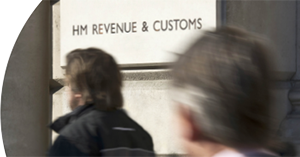
Changes to late filing penalty for 2019-20 Self Assessment returns


Dear customer,

Today HMRC has announced that Self Assessment customers will not receive a penalty for filing their 2019-20 tax return late, as long as they file online by 28‌‌ ‌February. We are still encouraging customers who have not yet filed to do so by 31‌‌ ‌January, if possible.

Customers still need to pay their Self Assessment tax bill by 31‌‌ ‌January. Interest will be charged from 1‌‌ ‌February on any outstanding liabilities. Customers can pay online, or through their bank, or by post before they file.

If any customer cannot afford to pay by 31‌‌ ‌January, they may be able to set up an affordable plan and pay in monthly instalments. But they will need to file their 2019-20 tax return before setting up a time to pay arrangement.

More information is available on GOV.UK.

Comments

Popular posts from this blog

Royal Town's Chamber elects new president

  Royal Town's Chamber elects new president 02 September 2020 Phil Arkinstall will today become the third president of the Sutton Coldfield Chamber of Commerce. The managing director of video production firm Ark Media is to be confirmed as successor to Katie Hale at the Chamber’s annual general meeting. Katie, who has served as president for the past two years, during which time she launched her EcoPledge sustainability initiative, will become the Chamber’s honorary chair. Phil, who was born and raised in the Royal Town, said: “I am delighted to have been elected as the president of the Sutton Coldfield Chamber of Commerce and I am looking forward to getting started in the role and work with the fabulous business community we have here in Royal Sutton Coldfield.  “I would like to pay tribute to our previous president Katie Hale for doing a fantastic job over the last two years, particularly her work in setting up the successful EcoPledge which has been adopted by a number of o...

Meet five advisers who’ll help your business become ‘fit for finance’

Meet five advisers who’ll help your business become ‘fit for finance’ Charlie Gilbert Content Manager Enterprise Nation   In our previous post, we covered the topic of  how to use any money you raise  – with the services of advisers being a crucial area small businesses should consider investing in. These services, however, are often needed before a business applies for funding. Take financial advisers and accountants, for example. Their job isn’t solely about helping you keep on top of your incomings and outgoings; it’s also about making you ‘fit for finance’ – in other words, helping position you as an attractive prospect to lenders or investors. They do this in myriad ways – from increasing profitability by helping you run your business more efficiently, to improving cashflow by advising on, and helping you implement, processes that keep cash in your business (automated payment collections, for example, or credit control). Some advisers will ensure you’re set up to sca...

What Is the Difference Between Bookkeeping and Accounting?

What Is the Difference Between Bookkeeping and Accounting? Bookkeeping encompasses organising and recording financial information, while accounting involves taking the data, summarising it, analysing, consulting and reporting. This blog will outline the differences that exist between accounting and bookkeeping in detail so that you can tell them apart. Differences between a bookkeeper and accountant An  accountancy firm  is tasked with the work of assessing and interpreting the financial data of a particular company and reporting on it. For this reason, it’s worth noting that an accountant has greater skill sets compared to a bookkeeper. A bookkeeper has the primary responsibility of handling the recording of financial transactions of a company. An accountant has to hold a certification or degree in CPA. Moreover, his/her salary is better than that of a bookkeeper. In the real sense, a bookkeeper reports to an accountant. On the other hand, a bookkeeper does not need to have a...